Professional Native Seeding & Erosion Control Services in Central Minnesota
Establishing Native Vegetation. Protecting the Land.
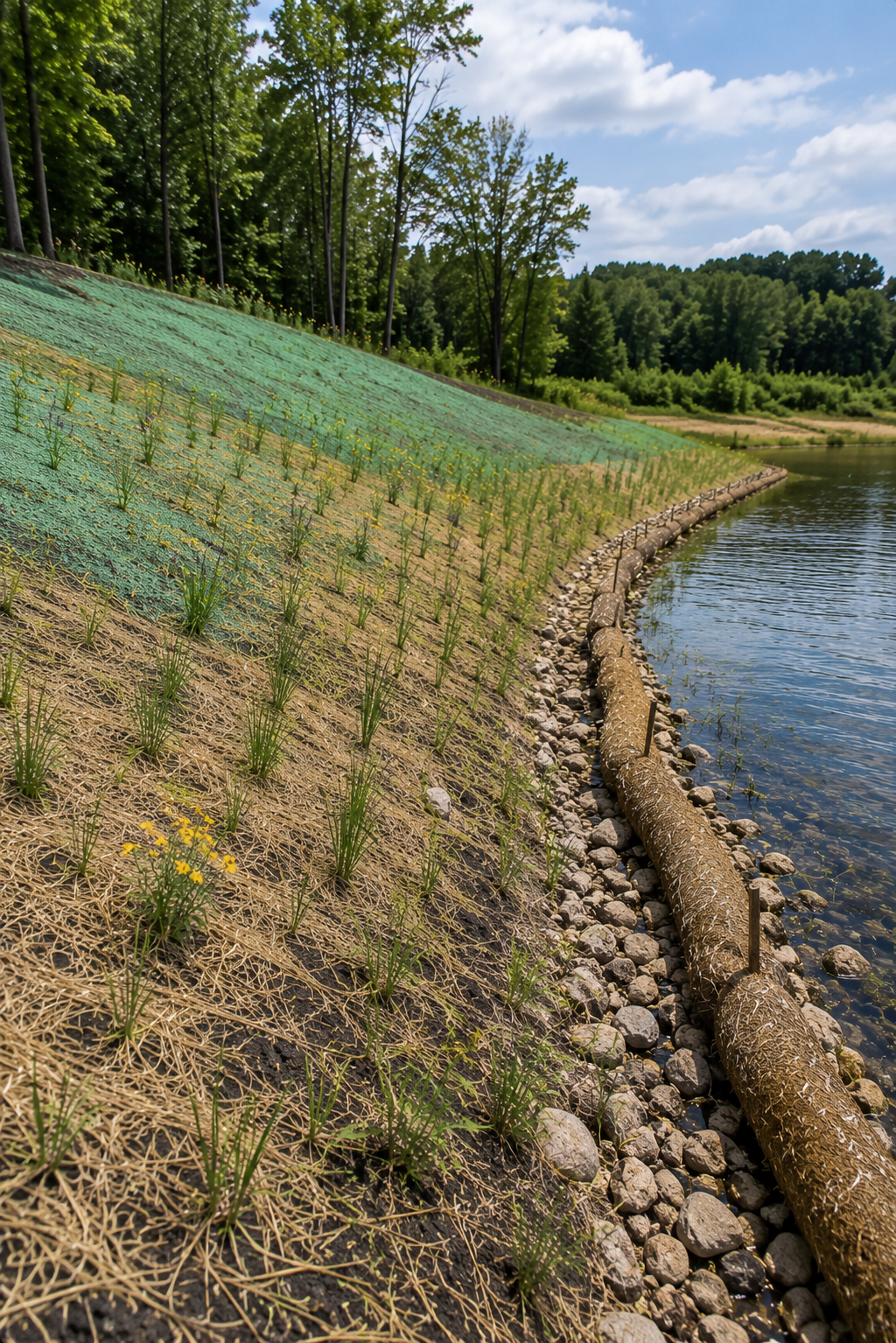
Tru Habitats provides professional native seeding, vegetation establishment, and erosion control services throughout Baxter, Brainerd, and Central Minnesota. We help landowners restore disturbed landscapes, stabilize exposed soils, establish native grasses and wildflowers, and protect properties from soil erosion. Our site-specific solutions are designed for wetlands, prairies, woodlands, shorelines, slopes, and other natural areas, promoting long-term soil stability, healthier vegetation, and improved wildlife habitat.
Healthy, established vegetation plays an important role in protecting soil, improving biodiversity, reducing erosion, and restoring the natural function of a landscape. Successful restoration, however, involves much more than simply spreading seed. Soil conditions, moisture levels, sunlight, drainage, existing vegetation, invasive species, and surrounding ecosystems all influence how well native plants establish.
With decades of experience working across Midwestern and northern ecosystems, Tru Habitats evaluates these conditions to develop customized seeding and erosion-control solutions that support healthy plant growth, reduce soil loss, and deliver lasting environmental benefits.
Custom Native Seed Mixes for Your Property
Native plants are naturally adapted to regional soils and climate conditions, making them an excellent choice for ecological restoration, erosion control, habitat improvement, and long-term land management.
Tru Habitats develops custom native seed mixes based on the unique characteristics and goals of each site. Rather than relying on a generic seed mixture, we select appropriate native grasses, wildflowers, sedges, and other vegetation suited to the site’s soil, moisture, sunlight, and existing plant communities.
Our native seeding services can be used for prairie restoration, wetland restoration, woodland areas, shoreline projects, wildlife habitat, disturbed soils, construction sites, and other land restoration projects.
Once established, diverse native vegetation can provide significant long-term benefits, including improved soil stability, greater plant and wildlife diversity, reduced erosion, increased habitat value, and less dependence on intensive mowing and maintenance.